

Staff Picks
May/June
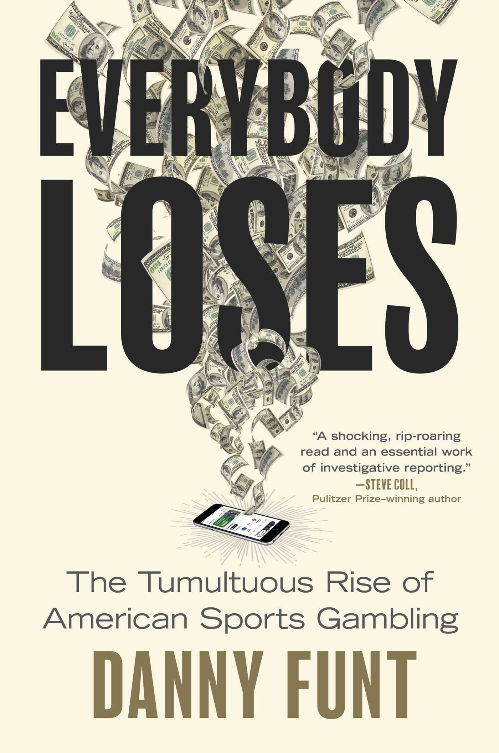
Everybody Loses: The Tumultuous Rise of American Sports Gambling
by Danny Funt
While gambling has always existed alongside sports, its legalization now a modern, app-driven form represents a significant shift. One that is deliberately engineered to keep users engaged. Funt draws parallels to industries like tobacco, particularly in how platforms target younger audiences and normalize habitual use. He also examines the consequences of sports betting, issues like harassment directed at athletes by frustrated bettors, threats to the integrity of games, and the deepening ties between betting companies and sports media, relationships that risk undermining journalistic independence. Major leagues such as the NBA, NFL, MLB, and NHL have largely abandoned their earlier resistance to gambling, in favor of massive new revenue streams. The result is a cultural shift in how sports are consumed. Watching without wagering is becoming less common, replaced by a more transactional and sometimes isolating experience. Drawing on interviews with sports executives, media figures, and gambling professionals, Funt adds depth and credibility to his reporting, revealing how the system operates from within. For sports and media fans or if you’re looking to better understand the societal consequences of commercialization, Everybody Loses is a well-researched critique of a rapidly expanding industry.
– Anna
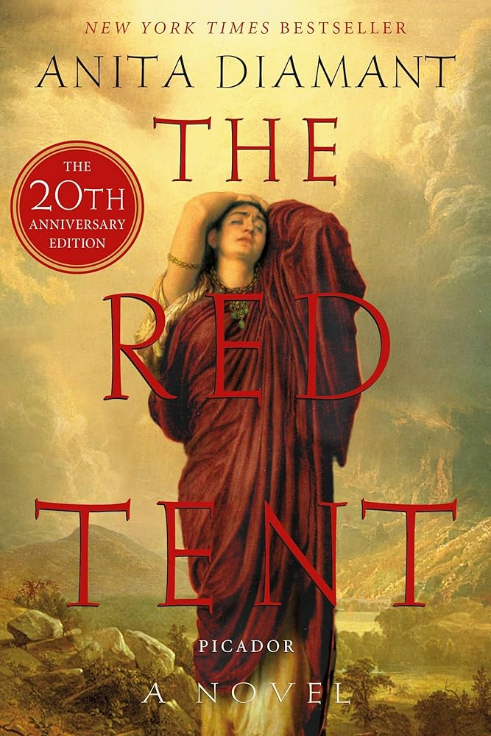
The Red Tent
by Anita Diamant
The Red Tent is a historical fiction that takes us back to the time of Genesis in the Bible. The book recounts the story of Jacob, who in the Judeo-Christian tradition is the father of twelve sons. These men were the origin of the twelve tribes of Israel. There is a lesser-told, but equally dark story in Genesis concerning the children of Jacob. Jacob’s only daughter Dinah was at the center of this tale, but we never see the story from Dinah’s point of view. It is told as a story of David and his sons. Dinah is never given a voice, until now. In The Red Tent, the author imagines Dinah’s story from birth to grave. Here, a biblical woman is finally given a rich and detailed story as the main character, not just an appendage to the men. Dinah’s life continues to unfold in vivid detail and rich descriptive language. This is a book that will let you peer into a world as ancient as the Bible’s beginning, through the eyes of the women of the time.
– Mrs. T

Strange Pictures
by Uketsu
In a story that lives up to its name, readers follow the multiple perspectives of college students, journalists, mothers, detectives, and even children, each accompanied by its own eerie drawing. What begins with a seemingly innocent blog post grows into an ominous obsession embroiled with murder and violence. Strange Pictures is perfect for lovers of short stories and complex puzzle solving. You can test your knowledge to see if you have what it takes to solve the mystery of the strange pictures before the narrators do!
– Grace
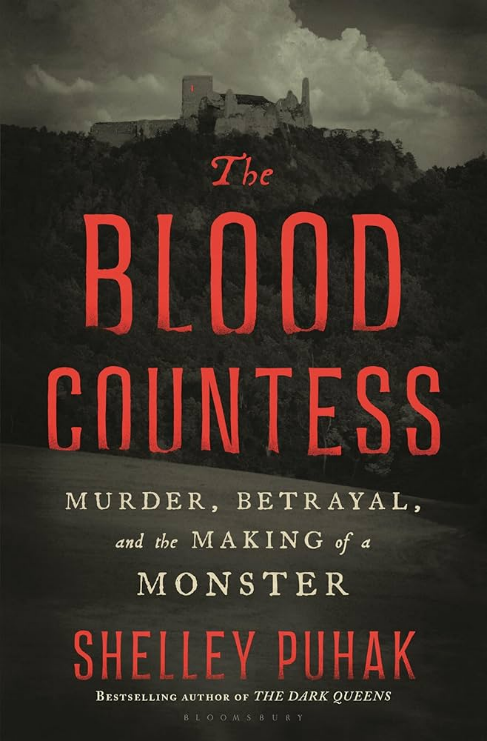
The Blood Countess: Murder, Betrayal, and the Making of a Monster
by Shelley Puhak
Phuak tracks the long-standing legend of Elizabeth Bathory, a wealthy 17th century countess said to be the world’s most prolific female serial killer. But what happens when the documents are actually examined, and the historical context of Elizabeth’s time is considered in a new way? Suddenly, Bathory is not a cold-blooded murderer who tortures young virgins in her Hungarian castle, but an intelligent woman that is targeted by the countless power-hungry men around her. In a historically rich analysis of Bathory’s time, Phuak creates a defense for the countess and exposes the corruption and flaws within her own justice system and the Hapsburg line.
– Grace
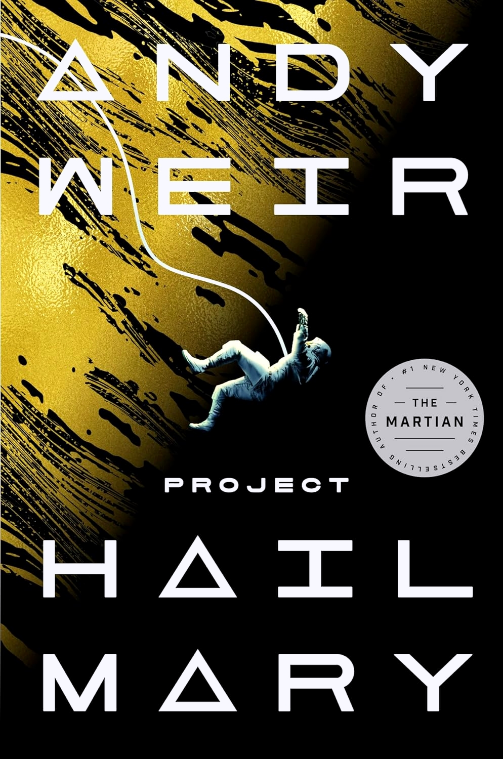
Project Hail Mary
by Andy Weir
From the first page we wake up, confused, right along with the main character Ryland Grace who has no memory of who he is and how he got there and a sneaking suspicion that something is very wrong. As Grace painfully stumbles around his new surroundings, we discover that two of his crewmates are dead and he slowly realizes that he is alone on a spaceship very far away from Earth.
What I liked about the book was that Grace didn’t just immediately remember who he was. He struggled throughout the entire book to recover his memories. Bits and pieces of his past slowly filtered through, so we learned along with Grace who he was and what he needed to do. Grace had to grapple with how devastatingly alone he was while slowly remembering that Earth was in danger and he was humanity’s last hope for survival.
Author Andy Weir creates a memorable character in Ryland Grace who uses his sarcasm and humor to navigate an extremely difficult situation while grappling with who he is as a person. The book, despite all the scientific talk, was very easy to read and understand. I would highly recommend listening to the audiobook, the narrator did an amazing job and there are certain parts of the audiobook that make it worth listening to.
– Jenny
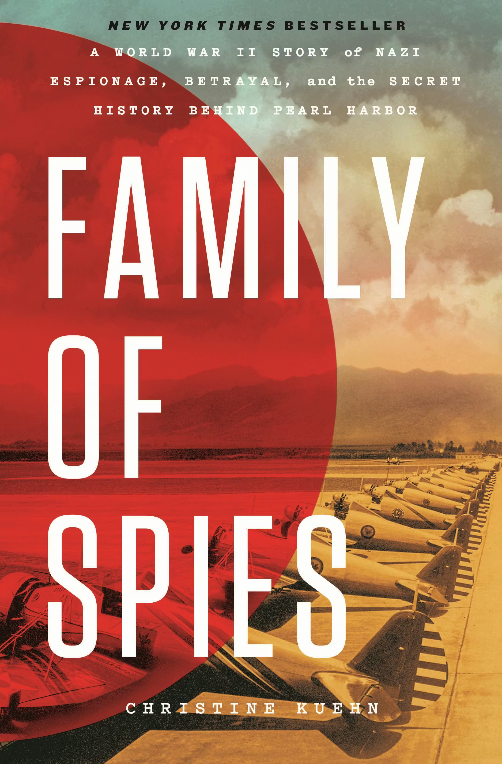
The Academy
by Christine Kuehn
This nonfiction family memoir reads like a novel that I couldn’t put down. In Family of Spies, Kuehn tells the story of how she learned her family’s darkest secret: her grandfather, Otto, was a Nazi spy living in Hawaii, trading messages with Japanese intelligence and sending them information about the Navy base at Pearl Harbor. Years later, Christine had no idea about her family’s involvement – both her father and aunt refused to talk about the past – until she was contacted by a screenwriter asking about her family’s involvement in the attack on December 17th. Family of Spies is her journey of piercing together her family history and reconciling herself with the deeds of her relatives. The book switches between Christine’s narrative and a narrative of her grandfather and had me deep in its clutches from the first page. I highly recommend it for anyone interested in history.
– Samantha
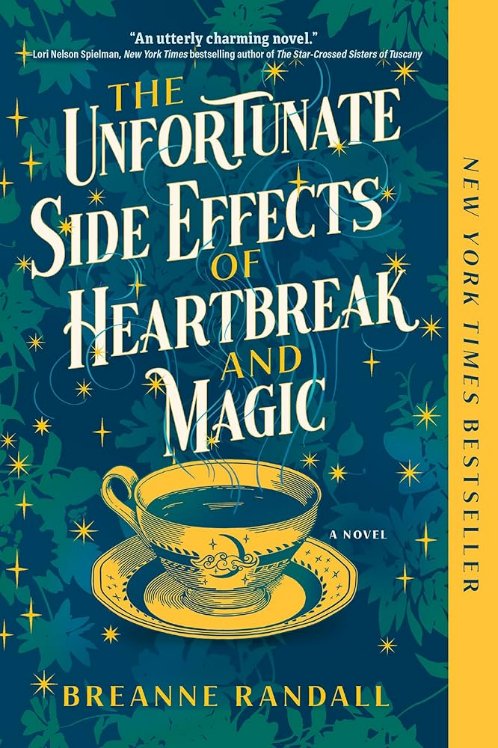
The Unfortunate Side Effects of Heartbreak and Magic
by Breanne Randall
Magical realism and a cozy fall small town evoke vibes of Practical Magic and Gilmore Girls. The Revelare’s all have a different kind of magic, and each comes with a different curse. Sadie’s curse is tied to heartbreak, four to be exact before she loses her magic, and she has already suffered two. With the impending death of her grandmother, Gigi, Revelare relatives start showing up, drawn by her grandmother’s curse. When Sadie’s first two heartbreaks, her estranged twin brother and her teen first love, show up followed by the mother she never knew, family secrets are exposed and something deadly is looking to claim more than one Revelare. Can Sadie figure out how to break the curse, keep her magic, and keep everyone she loves alive?
– Lisa
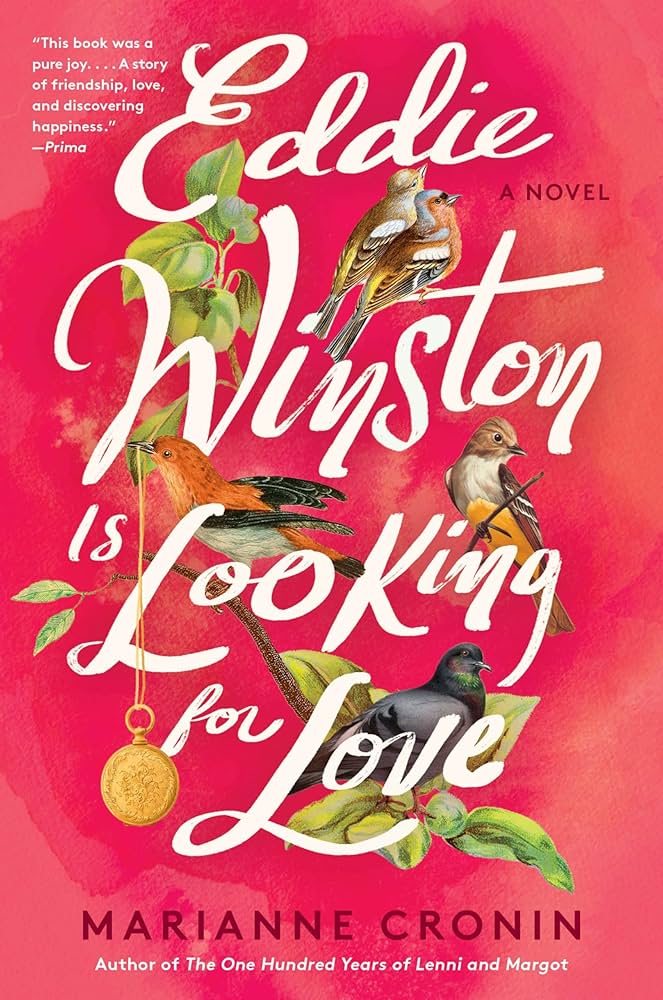
Eddie Winston is Looking for Love
by Marianne Cronin
If you enjoyed The One Hundred Years of Lenni and Margot by this author, you will enjoy this book also. It has the same charm and wit, with characters that will fill you with joy and optimism.
Eddie is a ninety-year-old retired professor who spends his days volunteering in a thrift shop, where he goes through boxes of items donated by friends and family of people recently deceased. It is here that he meets twenty-four-year-old Bella, who has just lost the love of her life. They strike up a sweet and endearing friendship that results in both of their lives being forever changed for the better. When Bella learns that Eddie had been in love before, but has never been kissed, she endeavors to find a romantic partner for Eddie. Eddie – always the cheerful optimist- is up for it. As Eddie helps Bella deal with her grief, and Bella helps Eddie to realize that it is never too late for love, they embark on many hilarious adventures together.
This heartwarming novel touches on themes of found family, love, grief, and healing with humor and compassion. Everyone needs an Eddie Winston in their life.
– Noreen